
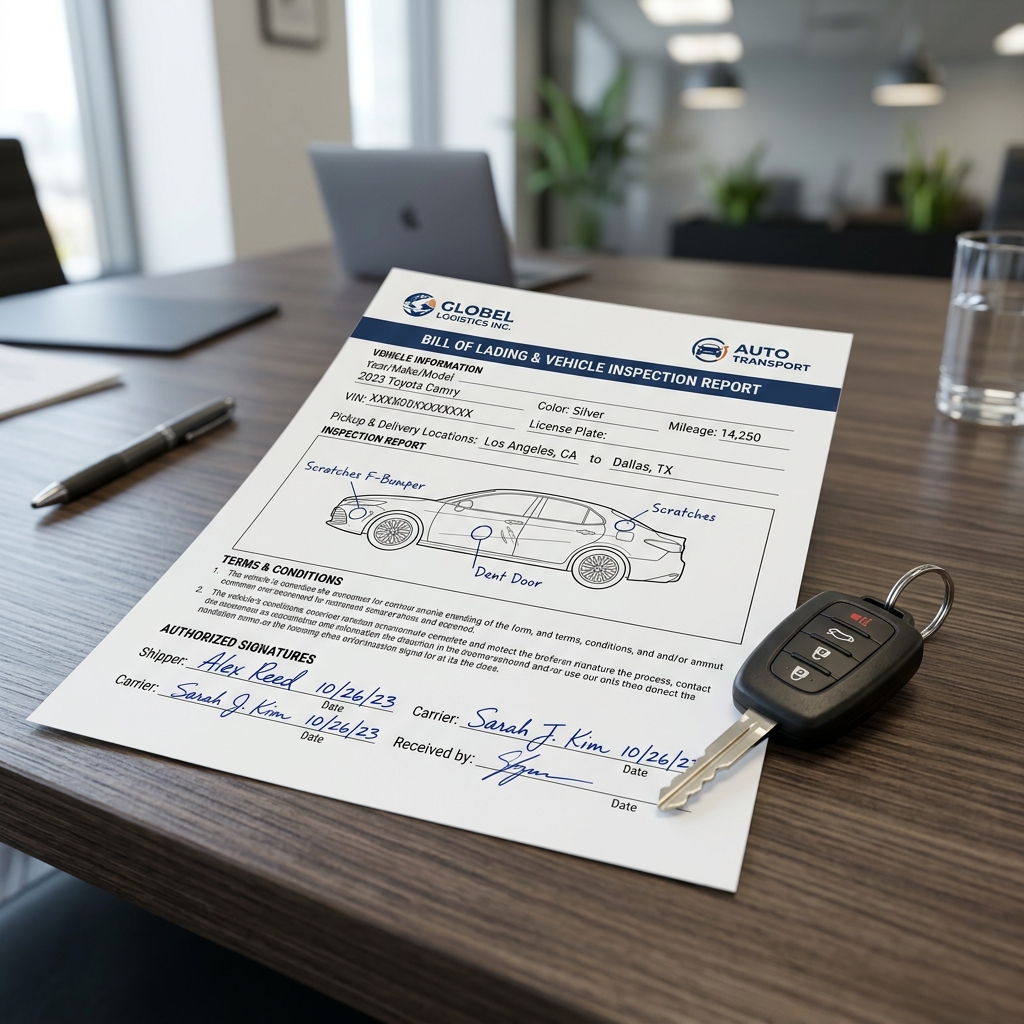
All licensed auto transport carriers in the United States are required to carry active cargo insurance starting at a minimum of $100,000 to cover vehicle damage during transit, with coverage limits ranging up to $1,000,000 or more for enclosed trailers. Understanding exactly what this cargo insurance covers — and what it doesn't — is essential for every vehicle shipper. This guide explains everything you need to know about auto transport insurance in 2026.
Guide Chapters
Why Auto Transport Insurance Matters More Than You Think
When you hand your vehicle over to an auto transport carrier, you're entrusting a valuable asset — often worth $20,000 to $100,000 or more — to a third party who will drive it across hundreds or thousands of miles on public highways. It's no surprise that insurance is consistently the number one concern for customers shipping their vehicles, surpassing even cost and transit time in customer surveys conducted across the auto transport industry.
The good news is that the auto transport industry is heavily regulated by the Federal Motor Carrier Safety Administration (FMCSA), which mandates that every licensed interstate carrier must carry specific minimum levels of insurance coverage. This means that when you book with a legitimate, FMCSA-registered auto transport company like Best American Auto Transport Inc, your vehicle is protected by legally required insurance from the moment it's loaded onto the carrier until it's delivered to your door.
However, not all insurance policies are created equal, and understanding the nuances of carrier liability, cargo insurance, supplemental coverage, and the claims process can mean the difference between a smooth experience and a costly headache. This comprehensive guide covers everything you need to know about auto transport insurance in 2026 — from the types of coverage available to how to verify your carrier's insurance, document your vehicle's condition, and file a claim if something goes wrong.
What Is Auto Transport Insurance?
Auto transport insurance is the financial protection that covers your vehicle against damage, loss, or theft while it is being shipped by a professional auto transport carrier. This insurance is fundamentally different from your personal auto insurance policy, which covers you while you're driving or while your car is parked at a known location.
There are two primary categories of insurance relevant to auto transport:
Carrier Liability Coverage
This is the baseline insurance that every FMCSA-licensed carrier is required to maintain. All licensed interstate carriers carry a minimum of $100,000 in cargo insurance (which protects the vehicles being transported), with limits scaling up to $250,000, $500,000, or $1,000,000+ for enclosed transport. In addition, federal law under 49 CFR Part 387 requires carriers to maintain a minimum of $750,000 in public liability insurance to cover third-party bodily injury and property damage. Carrier liability coverage is your primary protection during shipping and is included in your transport cost at no additional charge.
Supplemental (Gap) Insurance
This is optional, additional coverage that you can purchase separately to fill any gaps between the carrier's coverage limits and the full value of your vehicle. Supplemental insurance is most commonly recommended for high-value, luxury, classic, or exotic vehicles where the declared value may exceed the carrier's per-vehicle cargo coverage limit.
Cargo Insurance vs. Liability Insurance: What's the Difference?
Liability insurance protects against third-party claims — for example, if the carrier truck causes an accident that damages another person's property or causes bodily injury. Cargo insurance specifically protects the goods being transported — in this case, your vehicle. When evaluating a carrier's insurance, the cargo insurance policy is the one that matters most to you as a vehicle shipper. It covers physical damage to your car during loading, transit, and unloading.
Types of Auto Transport Insurance Coverage
Understanding the different types of insurance available when shipping your vehicle will help you make an informed decision about whether you need additional protection beyond what your carrier provides. Here are the four main types of auto transport insurance coverage:
1. Carrier Cargo Insurance (Mandatory)
Every FMCSA-licensed auto transport carrier is required to carry cargo insurance. This is the primary coverage that protects your vehicle during transit. Coverage limits typically range from $100,000 to $1,000,000 per occurrence, depending on the size and type of carrier. This insurance is included in your shipping cost — you don't pay anything extra for it. When you book with Best American Auto Transport Inc, every shipment is covered by the carrier's active cargo insurance policy.
2. Supplemental / Gap Insurance (Optional)
Supplemental insurance provides additional coverage above and beyond the carrier's cargo policy. It's designed to cover the "gap" between the carrier's per-vehicle coverage limit and the actual value of your vehicle. For example, if a carrier's cargo policy covers up to $150,000 per vehicle but your car is worth $250,000, supplemental insurance can cover the remaining $100,000. This coverage is especially valuable for luxury and exotic vehicle shipping.
3. Personal Auto Insurance
Your own personal auto insurance policy (the one you use for everyday driving) typically does not cover damage that occurs while your vehicle is in the custody of a commercial transport carrier. Most standard personal auto policies explicitly exclude coverage for vehicles being transported by a third party. Always check with your insurance agent to confirm, but don't rely on your personal policy as your backup during shipping.
4. Third-Party Transport Insurance
Several independent insurance companies offer standalone auto transport insurance policies that you can purchase directly. These policies provide coverage regardless of the carrier used and may offer broader terms, lower deductibles, or higher coverage limits than the carrier's included policy. Companies like Marsh, Zurich, and specialty transport insurers offer these policies, typically priced between $75 and $350 depending on vehicle value and coverage limits.
| Coverage Type | What It Covers | Typical Limits | Cost |
|---|---|---|---|
| Carrier Cargo Insurance | Vehicle damage during loading, transit, unloading | $100K–$1M per occurrence | Included |
| Supplemental / Gap Insurance | Coverage above carrier limits, lower deductibles | Up to full declared value | $50–$300 |
| Personal Auto Insurance | Usually does NOT cover third-party transport | Varies by policy | Part of existing premium |
| Third-Party Transport Insurance | Independent coverage regardless of carrier | $50K–$500K+ | $75–$350 |
What Does Carrier Insurance Actually Cover?
Carrier cargo insurance is designed to protect your vehicle against damage that occurs as a direct result of the transportation process. Here's a detailed breakdown of what is and isn't typically covered:
Damage From Loading and Unloading
One of the most common types of transport damage occurs during the loading and unloading process. This can include scratches from tie-down straps, dents from contact with other vehicles or the trailer frame, and scrapes from ramp edges. Carrier cargo insurance covers all damage that occurs during the loading and unloading process, provided it is documented on the Bill of Lading.
Weather and Road Debris Damage
Vehicles transported on open carriers are exposed to the elements, including rain, hail, snow, road salt, and flying debris from other vehicles. Carrier insurance covers damage from road debris and most weather-related incidents that occur during transit. However, some policies may exclude catastrophic weather events classified as "acts of God" — such as tornadoes, hurricanes, or severe hailstorms. If weather protection is a concern, consider enclosed auto transport.
Mechanical Damage During Transport
If the carrier's operations cause mechanical damage to your vehicle — for example, a brake line is snagged during loading, or transmission damage occurs because the vehicle was improperly secured — the carrier's insurance covers the repair costs. However, pre-existing mechanical issues are not covered.
Theft During Transport
While extremely rare, theft of vehicles or vehicle components (wheels, catalytic converters) during transport is covered under most carrier cargo insurance policies. The carrier is legally responsible for the vehicle from the moment it's loaded until it's delivered.
| ✅ Typically Covered | ❌ Typically NOT Covered |
|---|---|
| Damage during loading/unloading | Pre-existing damage (dents, scratches, rust) |
| Road debris and flying rocks | Personal items left inside the vehicle |
| Collision damage while on the carrier | Mechanical/electrical failure unrelated to transport |
| Hail and moderate weather damage | Acts of God (earthquakes, floods, tornadoes) |
| Theft of vehicle or parts during transport | Normal wear and tear (tire wear, brake dust) |
| Fire damage while on the trailer | Damage from items shifting inside the vehicle |
*Coverage specifics vary by carrier and policy. Always request and review the carrier's Certificate of Insurance (COI) before shipping.
How to Verify Your Carrier's Insurance Before Shipping
Verifying that your auto transport carrier has active, valid insurance coverage is one of the most important steps you can take to protect your vehicle. Here's a step-by-step guide to confirming your carrier's insurance status:
- Check the FMCSA SAFER System: Visit the FMCSA's Safety and Fitness Electronic Records (SAFER) system at safer.fmcsa.dot.gov. Enter the carrier's MC (Motor Carrier) number or DOT number to verify their operating authority, safety rating, and insurance status. Look for "AUTHORIZED" status under Operating Authority and confirm that insurance filings are current.
- Request a Certificate of Insurance (COI): Ask the carrier or broker to provide a current Certificate of Insurance before your vehicle is picked up. A legitimate carrier will provide this without hesitation. The COI is issued by the carrier's insurance company and provides proof of active coverage.
- Review the COI carefully: When you receive the Certificate of Insurance, verify the following details:
- The policy number matches the carrier's records
- The coverage limits are adequate for your vehicle's value
- The effective and expiration dates confirm the policy is current
- The named insured matches the carrier company name
- The type of coverage includes cargo insurance (not just liability)
- Verify the insurance company: Confirm that the insurance company listed on the COI is a legitimate, AM Best-rated insurer. You can verify this at ambest.com or by calling the insurer directly using the phone number on the COI.
- Check for red flags: Be wary of carriers who refuse to provide insurance documentation, have recently lapsed coverage, or list unusually low coverage limits. Other red flags include recently issued MC numbers (less than 6 months old), no physical business address, and pressure to pay the full amount upfront before verifying coverage.
At Best American Auto Transport Inc, we verify every carrier in our network for active FMCSA authority, valid insurance, clean safety records, and a minimum cargo insurance policy. When you book with us, you can be confident that your carrier's insurance has already been vetted. Learn more about our carrier vetting process on our Why Best American page.
The Vehicle Inspection Process (Bill of Lading)
What Is a Bill of Lading (BOL)?
The Bill of Lading is the single most important document in the entire auto transport process — and it is absolutely critical for any insurance claim. The BOL is a legal document created at the time of vehicle pickup that serves three purposes:
- It serves as a receipt confirming the carrier has taken possession of your vehicle
- It serves as a contract outlining the terms of transport between you and the carrier
- It serves as a condition report documenting the exact state of your vehicle at pickup
Why the Pre-Transport Inspection Is Critical
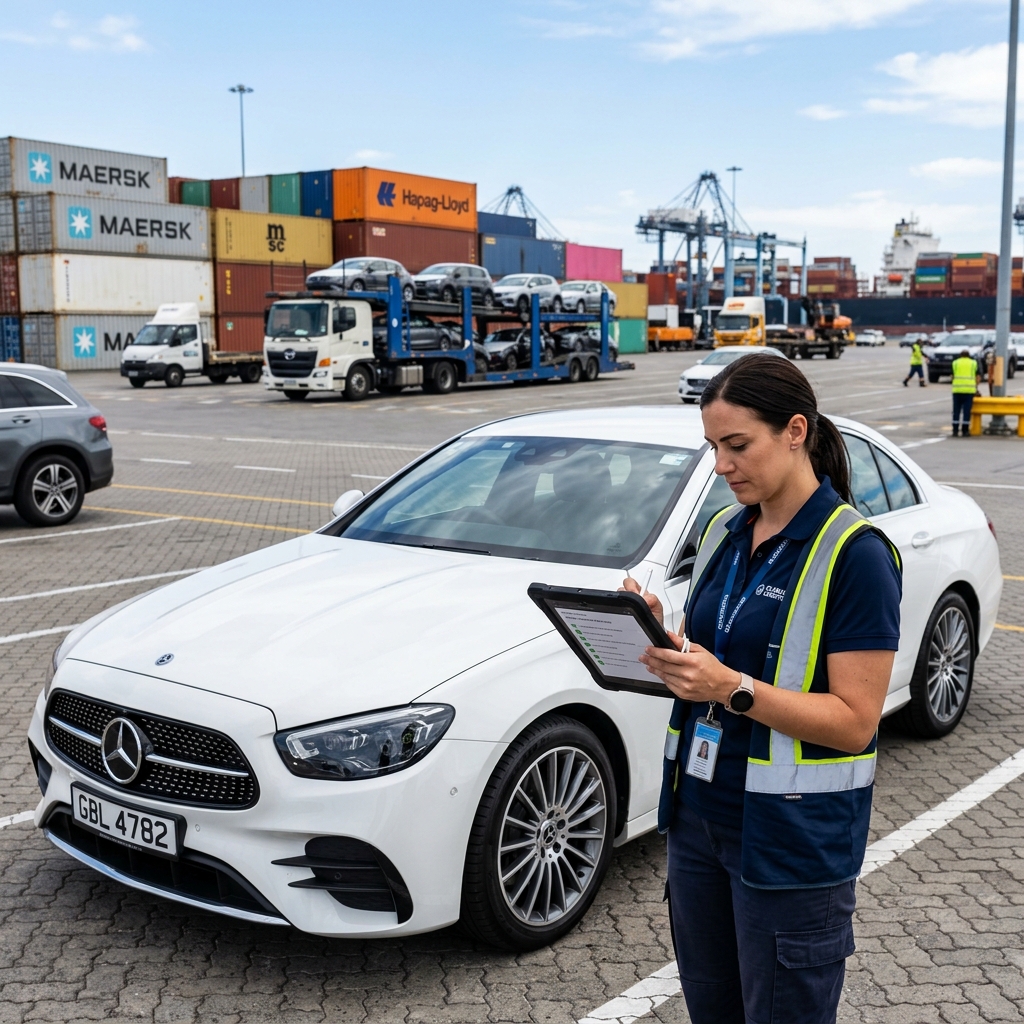
Before your vehicle is loaded onto the carrier, the driver will conduct a thorough walk-around inspection and document any existing damage on the BOL. This includes dents, scratches, chips, cracks, missing parts, and any other cosmetic or structural issues. This inspection establishes the baseline condition of your vehicle — and it is the standard against which any new damage will be measured at delivery.
You must be present for this inspection. Walk around the vehicle with the driver and ensure that every pre-existing mark, scratch, or dent is accurately noted on the BOL. If the driver misses something, point it out and insist it be documented. A thorough, accurate BOL at pickup is your strongest defense if you need to file an insurance claim later.
How to Document Your Vehicle Before Shipping
In addition to the driver's inspection, take your own comprehensive photos and video before the vehicle is loaded. Follow these best practices:
- Photograph all four sides, the front, rear, roof, and underbody (if accessible)
- Take close-up photos of any existing damage, no matter how minor
- Photograph the odometer reading
- Record a 360-degree video walk-around in natural daylight
- Include date and time stamps on all photos (most smartphones do this automatically)
- Email the photos to yourself to create a timestamped backup
What to Check at Delivery
When your vehicle arrives at the delivery location, perform the same thorough inspection before signing the delivery section of the Bill of Lading. Compare the vehicle's current condition to the pickup BOL and your photographs. If you notice any new damage, note it clearly on the delivery BOL before signing. Once you sign the BOL without noting damage, it becomes significantly more difficult to file a successful claim.
Ship With Confidence — Every Vehicle Fully Insured
Best American Auto Transport Inc partners only with carriers that carry verified, active cargo insurance. Get a free quote and ship worry-free.
Get My Free Quote →Or call us: (302) 355-5544
How to File an Auto Transport Insurance Claim
If your vehicle is damaged during transport, acting quickly and methodically is essential. The FMCSA requires carriers to acknowledge damage claims within 30 days and resolve them within 120 days. Here is the step-by-step process for filing a successful auto transport insurance claim:
- Document the Damage Immediately at Delivery: Before signing the delivery Bill of Lading, conduct a complete inspection of your vehicle. Compare its condition to the pickup BOL and your pre-shipping photographs. Do not rush this step — even if the driver is in a hurry. Inspect the vehicle in good lighting (daylight if possible) and check every panel, bumper, window, wheel, and undercarriage area.
- Note All Damage on the Bill of Lading: Write a clear, specific description of every new damage item on the delivery section of the BOL. Don't use vague language like "possible scratch." Instead, write specific descriptions like "6-inch scratch on driver's side rear quarter panel" or "2-inch dent on passenger front door below handle." Both you and the driver must sign the updated BOL.
- Take Detailed Photographs and Video: Photograph every area of new damage from multiple angles. Include wide shots showing the location on the vehicle and close-up shots showing the detail and severity of the damage. Record video as well. Ensure all media has date and time stamps.
- Contact the Carrier Within 24–48 Hours: Call the carrier's claims department (or your broker's claims contact) within 24–48 hours of delivery. Document the call — note the date, time, name of the person you spoke with, and what was discussed. Follow up the phone call with a written email summarizing the conversation.
- File a Formal Written Claim: Submit a formal written claim to the carrier's insurance company. Include:
- A copy of the Bill of Lading (both pickup and delivery sections)
- All photographs and video of the damage
- Your pre-shipping photographs for comparison
- A written repair estimate from a certified body shop
- A cover letter describing the damage and requesting compensation
- Follow Up and Negotiate: If you don't receive an acknowledgment within 30 days, follow up in writing. The carrier's insurer may request additional documentation, an independent appraisal, or a second repair estimate. Be responsive but firm. If the initial settlement offer is inadequate, you have the right to negotiate or escalate the claim.
Typical Claim Resolution Timeline
- Within 30 days: Carrier must acknowledge receipt of your claim
- 30–60 days: Investigation and documentation review
- 60–90 days: Settlement offer or request for additional information
- 90–120 days: Final resolution and payment
If your claim is not resolved within 120 days, you may file a complaint with the FMCSA or pursue the matter through small claims court or civil litigation.
How Much Does Auto Transport Insurance Cost?
One of the best things about auto transport insurance is that the primary coverage — carrier cargo insurance — is included in your shipping cost at no additional charge. Every legitimate auto transport company includes insurance as part of their standard service. You should never have to pay extra for basic cargo insurance coverage.
However, if you choose to purchase supplemental or third-party insurance for additional protection, here's what you can expect to pay:
| Vehicle Value | Supplemental Insurance Cost | Typical Deductible | Recommended For |
|---|---|---|---|
| Under $25,000 | $50–$75 | $250–$500 | Standard vehicles (optional) |
| $25,000–$50,000 | $75–$125 | $250–$500 | New cars, higher-trim models |
| $50,000–$100,000 | $125–$200 | $500–$1,000 | Luxury vehicles, classic cars |
| $100,000–$250,000 | $200–$300 | $1,000–$2,500 | Exotic and collector vehicles |
| $250,000+ | $300+ (custom quote) | Negotiable | Ultra-luxury, one-of-a-kind vehicles |
Factors That Affect Insurance Cost
- Declared vehicle value: Higher-value vehicles require more coverage, increasing the premium
- Transport type: Enclosed transport carriers typically carry higher coverage limits
- Deductible amount: Lower deductibles mean higher premiums
- Distance and route: Longer hauls and high-traffic routes may factor into pricing
- Vehicle condition: Non-running or modified vehicles may have different coverage terms
10 Tips to Protect Your Vehicle During Shipping
While insurance provides financial protection, prevention is always better than filing a claim. Here are ten proven strategies to minimize the risk of damage during auto transport:
- Choose a licensed and insured carrier: Only ship with carriers registered with the FMCSA and verified through the SAFER system. Working with a reputable broker like Best American Auto Transport Inc ensures every carrier in your shipment chain has been vetted for insurance, safety, and reliability.
- Request enclosed transport for high-value vehicles: If you're shipping a luxury, classic, or exotic vehicle, enclosed auto transport provides complete protection from weather, road debris, and UV exposure — plus higher insurance coverage limits.
- Remove all personal belongings: Carrier insurance does not cover personal items inside your vehicle. Remove everything — electronics, documents, clothing, accessories, toll transponders, and aftermarket accessories that aren't bolted down.
- Disable aftermarket alarms: Aftermarket alarm systems can be triggered by the vibrations and movement of transport, draining your battery and causing unnecessary delays. Disable or disconnect any non-factory alarm systems before shipping.
- Document everything with photos and video: Take comprehensive photographs and video of your vehicle from all angles before the carrier arrives. This documentation is your proof of pre-shipping condition.
- Keep your fuel tank at 1/4 full or less: A full fuel tank adds unnecessary weight, increases the risk of fuel leakage, and may cause the carrier to exceed weight limits. Most carriers request that the fuel tank be at 1/4 capacity or less.
- Check tire pressure and battery: Ensure your tires are properly inflated and your battery is charged. The vehicle needs to be driven on and off the carrier, so it must be operational unless you've arranged for inoperable vehicle transport.
- Fold in mirrors and retract antennas: Side mirrors and power antennas can be damaged during loading and transport. Fold in side mirrors and retract or remove any extended antennas to reduce the risk of contact damage.
- Wash your vehicle before pickup: A clean vehicle makes it easier to identify and document pre-existing damage during the inspection. Dirt and grime can hide scratches, chips, and dents that need to be noted on the BOL.
- Be present at pickup and delivery: Whenever possible, be physically present for both the pickup and delivery inspections. Your presence ensures a thorough, accurate condition report and gives you the opportunity to document any issues immediately.
Open vs. Enclosed Transport: Insurance Considerations
The choice between open auto transport and enclosed auto transport has significant implications for your insurance coverage. Here's how the two options compare from an insurance perspective:
Open Transport Insurance
- ✓ Standard carrier cargo insurance included
- ✓ Typical coverage: $100K–$250K per vehicle
- ✓ Adequate for most standard vehicles
- — Vehicle exposed to weather and debris
- — Higher claim frequency for cosmetic damage
Best for: Vehicles valued under $75,000
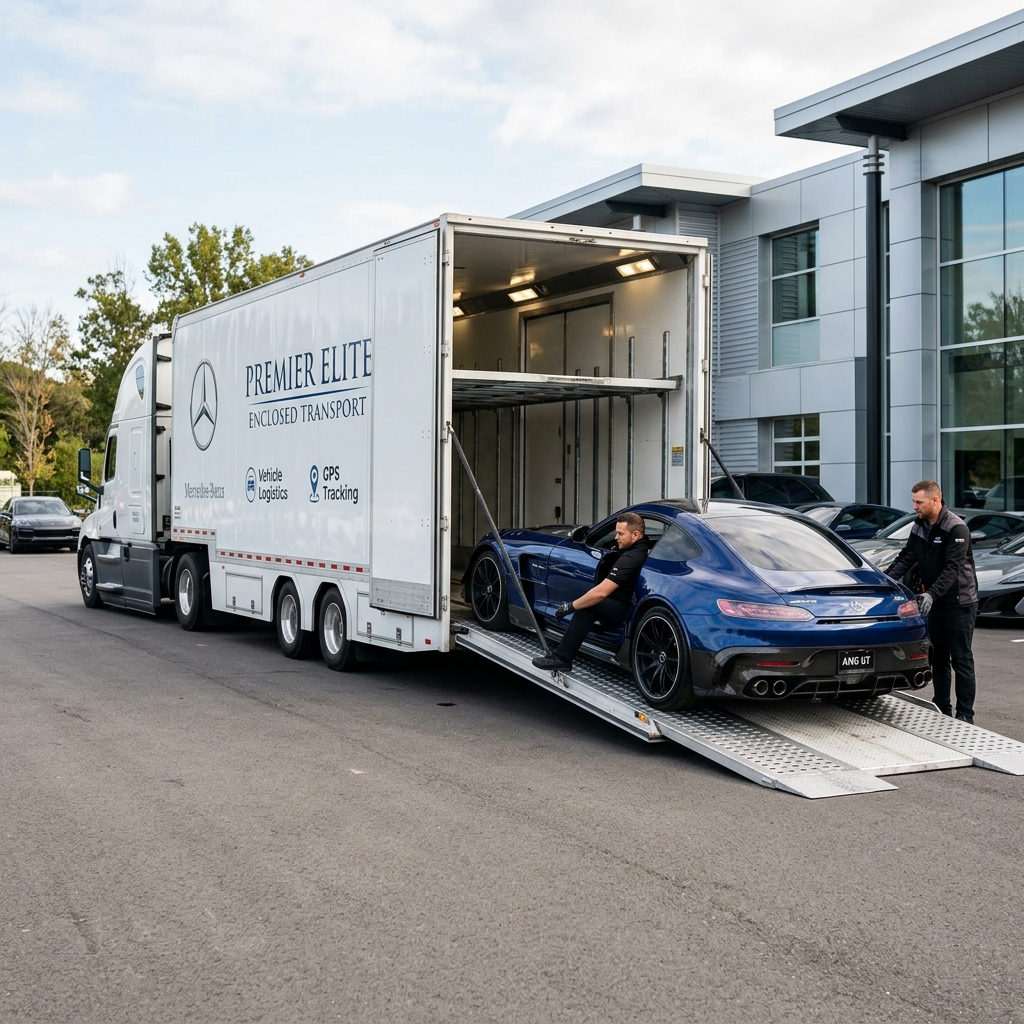
Enclosed Transport Insurance
- ✓ Higher cargo insurance coverage limits
- ✓ Typical coverage: $250K–$1M+ per vehicle
- ✓ Complete weather and debris protection
- ✓ White-glove handling with hydraulic lift gates
- ✓ Lower claim frequency due to enclosed protection
Best for: Luxury, classic, exotic vehicles
When is enclosed transport worth the premium? If your vehicle is valued at more than $75,000, is a classic or collector car, is a brand-new vehicle being delivered from a dealership, or has sentimental value that goes beyond its market price, enclosed transport provides both superior physical protection and significantly higher insurance coverage. The additional cost — typically 30–40% more than open transport — is a smart investment for peace of mind. For a detailed cost comparison, see our guide on how much it costs to ship a car across the country.
Common Auto Transport Insurance Myths Debunked
Misinformation about auto transport insurance is widespread. Here are five common myths — and the facts:
Myth 1: "My personal auto insurance covers shipping"
Fact: Most personal auto insurance policies explicitly exclude coverage for vehicles in the custody of a third-party commercial carrier. Your personal policy covers you while driving or while the vehicle is parked, but transport is a different category entirely. Always verify with your insurer, but don't count on it.
Myth 2: "All carriers have the same insurance"
Fact: While all FMCSA-licensed carriers must meet minimum insurance requirements, coverage limits, deductibles, and policy terms vary significantly between carriers. A small owner-operator may carry $100,000 in cargo coverage, while a large fleet carrier may carry $1,000,000 or more. Always verify the specific coverage limits before booking.
Myth 3: "You can't file a claim for minor scratches"
Fact: You can file a claim for any new damage that wasn't documented on the pickup Bill of Lading — including minor scratches, small dents, and paint chips. The key is proper documentation. If the damage is noted on the delivery BOL and supported by your pre-shipping photographs, you have a legitimate claim regardless of the damage's size.
Myth 4: "The broker is responsible for damage, not the carrier"
Fact: The carrier — the company physically transporting your vehicle — bears legal responsibility for damage during transit. Auto transport brokers like Best American Auto Transport Inc connect you with carriers but do not physically move vehicles. However, a good broker will advocate on your behalf and assist with the claims process if damage occurs.
Myth 5: "Insurance claims take forever and never pay out"
Fact: When properly documented with a clear BOL and photographic evidence, the vast majority of legitimate auto transport damage claims are resolved within 30–90 days. The FMCSA requires carriers to acknowledge claims within 30 days and resolve them within 120 days. Carriers who consistently fail to honor legitimate claims risk losing their operating authority.
Understanding FMCSA Insurance Regulations
The Federal Motor Carrier Safety Administration sets and enforces insurance requirements for all interstate auto transport carriers. Here are the key regulations every vehicle shipper should understand:
- Cargo Insurance Minimums: All legitimate car carriers carry cargo insurance starting at a minimum of $100,000 to cover transit damage, scaling to $1,000,000+ for enclosed specialty haulers. In addition, under 49 CFR Part 387, interstate carriers must maintain at least $750,000 in public liability insurance for general third-party accidents.
- BMC-91X Filing: Carriers must file proof of insurance (Form BMC-91X) with the FMCSA. This filing is publicly searchable through the SAFER system, allowing consumers to verify insurance status.
- Carmack Amendment: This federal law (49 USC §14706) governs carrier liability for cargo loss and damage in interstate commerce. Under the Carmack Amendment, the carrier is presumed liable for damage to goods in its custody, and the burden of proof shifts to the carrier to demonstrate that the damage was not caused by their negligence.
- Claims Filing Deadlines: Under federal regulations, carriers must acknowledge receipt of a damage claim within 30 days and either pay, decline, or make a settlement offer within 120 days.
- Operating Authority: Carriers must maintain active MC (Motor Carrier) authority to legally operate. If a carrier's authority is revoked or suspended — often due to insurance lapses — they cannot legally transport vehicles in interstate commerce.
You can verify any carrier's FMCSA registration, operating authority, and insurance status at safer.fmcsa.dot.gov. Best American Auto Transport Inc's DOT number is 4277211 and MC number is 1662088.
Why Choosing the Right Broker Matters for Insurance Protection
While the carrier's insurance is your primary protection, the auto transport broker you choose plays a critical role in ensuring your vehicle is protected throughout the shipping process. Here's why working with a reputable broker like Best American Auto Transport Inc enhances your insurance protection:
- Pre-vetted carrier network: We verify every carrier's FMCSA authority, insurance status, safety record, and customer ratings before assigning them to your shipment
- Insurance verification on every booking: Before your vehicle is dispatched, we confirm that the assigned carrier's cargo insurance is active and current
- Claims assistance: If damage occurs, our team helps you navigate the claims process, provides documentation guidance, and follows up with the carrier's insurance company
- Price Lock Guarantee: The rate we quote is the rate you pay — no hidden fees or surprise charges
- Zero Upfront Deposit: You pay nothing until your carrier is assigned and dispatched, ensuring accountability
For door-to-door shipping, state-to-state transport, or any other auto shipping need, contact us to learn how we protect your vehicle from quote to delivery.
Frequently Asked Questions
Does auto transport insurance cover all damage?
No, auto transport insurance does not cover all damage. Standard carrier cargo insurance covers damage caused during loading, unloading, and transit — including damage from road debris, weather events, and collisions. However, it does not cover pre-existing damage, personal items left inside the vehicle, mechanical or electrical failures unrelated to transport, and in some policies, acts of God such as earthquakes or floods. Always review the carrier's Certificate of Insurance and understand the exclusions before shipping.
How much insurance does a car carrier have?
All reputable car carriers carry cargo insurance starting at a minimum of $100,000 for standard open transport, going up to $250,000 to $1,000,000+ for enclosed carriers specializing in luxury, classic, and exotic vehicles. While the FMCSA requires a minimum of $750,000 in general public liability insurance, the cargo insurance (starting at $100,000) is the specific coverage that protects your vehicle against transit damage.
Should I get additional insurance for shipping my car?
For most standard vehicles valued under $50,000, the carrier's included cargo insurance provides adequate protection. However, if you are shipping a luxury, classic, exotic, or high-value vehicle worth more than $75,000, purchasing supplemental gap insurance is strongly recommended. Supplemental policies typically cost $50–$300 and can provide coverage up to the full declared value of your vehicle.
What if my car is damaged during transport?
If your car is damaged during transport, document the damage immediately at the point of delivery before signing the Bill of Lading. Note all damage on the BOL, take detailed photographs and video from multiple angles, and contact the carrier within 24–48 hours to report the damage. File a formal written claim with the carrier's insurance company, including your BOL, photos, and a repair estimate from a certified body shop. Most claims are resolved within 30–90 days.
Does my personal auto insurance cover shipping?
In most cases, your personal auto insurance policy does not cover damage that occurs while your vehicle is in the custody of a third-party auto transport carrier. Standard personal auto policies cover you while driving or while the vehicle is parked, but they typically exclude coverage when the vehicle is being transported by a commercial carrier. Always check with your insurance agent before shipping, but plan on relying on the carrier's cargo insurance as your primary coverage during transport.
How do I file a claim for transport damage?
To file a claim for transport damage: (1) Document all damage at delivery before signing the Bill of Lading. (2) Note the damage clearly on the BOL with specific descriptions. (3) Take detailed photos and video of every damaged area. (4) Contact the carrier within 24–48 hours. (5) Submit a formal written claim to the carrier's insurance company with your BOL, photographs, and a repair estimate. (6) Follow up regularly. Most carriers are required by FMCSA regulations to acknowledge claims within 30 days and resolve them within 120 days.
What is a Bill of Lading and why is it important for insurance?
A Bill of Lading (BOL) is the official legal document created at vehicle pickup that records the condition of your vehicle before transport. It serves as a binding contract between you and the carrier, and it is the single most important document for any insurance claim. The BOL documents all pre-existing damage, scratches, dents, and the overall condition of the vehicle. At delivery, the BOL is updated to reflect any new damage. Without a properly completed BOL, filing a successful insurance claim is extremely difficult.
How much does supplemental auto transport insurance cost?
Supplemental auto transport insurance typically costs between $50 and $300 depending on the declared value of your vehicle, the coverage limits you select, and the deductible amount. For a vehicle valued at $25,000–$50,000, expect to pay $50–$100. For vehicles valued at $50,000–$100,000, costs range from $100–$200. For high-value vehicles over $100,000, supplemental coverage may cost $200–$300 or more.
Ready to Ship Your Vehicle With Full Insurance Protection?
Every vehicle shipped through Best American Auto Transport Inc is fully insured with verified carrier coverage. Get your free, no-obligation quote today — no deposits, no hidden fees, and a price lock guarantee.
Get My Free Quote →Or call us directly: (302) 355-5544
David Cooper is a Senior Logistics Coordinator at Best American Auto Transport Inc with over a decade of experience coordinating cross-country freight and specialized vehicle transport for individual, military, and corporate clients across all 50 states. He specializes in insurance compliance, carrier vetting, and claims resolution.